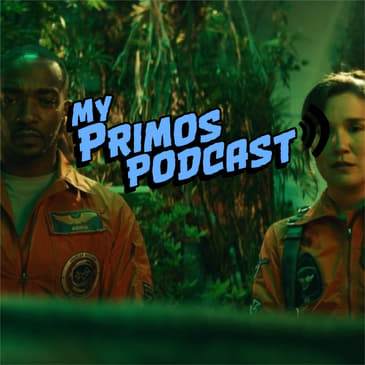
[00:00:01] Hey, on this Primos and Primas and Primas. Welcome to My Primos Podcast. Freddie and Walter are out today, but we have a very special guest with us. So first, I'll introduce myself, Kevin Garcia or as Freddie always says it, kevengarcia.com. And Elia Maria, one of our new
[00:00:28] primas here with My Primos Podcast. Elia, thank you for coming back again. What do you think about joining the team? I'm so excited. I can't wait to discuss media with the primas, you know.
[00:00:40] And with that in mind, we have a very special guest today because I go to South by Southwest every year and my favorite thing at South by is seeing the film, some of which immediately
[00:00:50] go to wide release, some of which need to get shopped around to studios and other people who have done them out. But there was one this past year that my partner could not stop
[00:00:59] talking about. She saw the premiere and said, I had to go see it. So she made me go watch the second showing and I loved it as well. And that is if you were the last, which is currently
[00:01:07] streaming on Peacock. And we have with us the director, the writer, the creator Christian Mercado Fergova. Christian, could you introduce yourself real quick? Oh yeah, yeah. Well, I didn't write it. Angela Barossa wrote it. I just want to make sure she gets the right
[00:01:22] credit. Oh please. Yes, you are a writer. You are a writer. I do write but this beautiful movie was written by her. I had the honor of directing it. Yeah, I'm Christian Mercado. Wild little director doing directing things. Thank you. Well, tell us a bit about yourself.
[00:01:46] You are Puerto Rican, is that correct? Yeah, yeah, I am Puerto Rican. I grew up in Spanish Harlem and Puerto Rico. I kind of just went back and forth my whole life and it kind of
[00:01:58] gave me interesting perspectives, you know? Because you know, you kind of get a little bit of farm life and city life, you know? There's like this big gap between the two. And I feel like it's always gave me like a wide perspective, you know?
[00:02:14] One of the things that I always hear people talking about in especially in like wider media is better representation behind the camera. Yeah, I'm told before that. I mean, honestly, the numbers are so abysmal. Like they're really hard to suppress when you look at the studies.
[00:02:31] There was that recent study that dropped where it's just not good. Yeah. It's really terrible. I find it really interesting though because there used to be like this weird argument that, oh, people aren't ready. There's not, you know, oh, we don't have anyone who's prepared
[00:02:51] or has the skills. That's not the case anymore. That's like, that's ridiculous. It's actually probably people now that exceed the white mediocrity that exists. Exactly, exactly. I'm honest about it. Like sometimes I'm like baffled. Like it's baffling
[00:03:08] honestly. And there's so many, but it's like such a systemic problem. You know? Like I think also I feel like so much of that stuff is just tied to antiquated ideas or people not take
[00:03:21] right risk. I mean, yeah, it's become very risk averse, you know? And I think sometimes too it's detriment because no new idea, new ideas are really hard to come by. Things aren't emerging the way they used to. People are really taking, taking safer bets. But
[00:03:37] exciting work doesn't really come out of that. You know? So it's really complicated. Yeah, it sucks. Why do you think it's so important to have that kind of diversity behind the camera? Or
[00:03:48] let me phrase that. I say there were diversity but like the word I hear people talk about more is inclusion, you know what I mean? And inclusion. Well, first of all, it'll create more of it. That's the first thing, right? Like specifically let's say
[00:04:04] for Latine films and filmmakers, right? We always have this argument that every shot we get is the last shot. Like you know, like this one show is going to be the one that holds it all,
[00:04:15] like this one movie. And like I think like if you kind of built the infrastructure so that like there's more of us that are like the visionaries and people that are behind the scenes
[00:04:25] kind of writing the stories or like directing it, then you'll have more of it because then it's like we're creating more of it. There'll be more space for it. So it won't be like
[00:04:36] this desperate cry all the time, you know? Yeah. Which shouldn't be, you know? Like you can't expect every show or every film to hold everything that is like, you know, of one people in it, you know? Like it doesn't make sense and also just having different voices
[00:04:55] in behind the scenes creates more unique work anyway. Like you'll get more perspectives, more unique fans, you'll see things you haven't seen before yet. You know? Like when you have a kind of like a monolithic voice that's just like singular, it kind of like flattens fans,
[00:05:11] you know? And you just shake it up a lot when you have new voices kind of introduced, you know? Like there'll be new perspectives, new ways to kind of build things. Yeah, it's just going to create cooler stuff I think. Agreed. Yeah. I've noticed like an influx
[00:05:28] even in like some of the newer shows I'm watching, I'm seeing like Latina names in the credits more and more and moving up higher and higher. And I'm like, see, see you again. Absolutely. And
[00:05:40] like I've noticed your posts on socials where you show like this is the percent of representation we have right now. And it's very concerning when there's so many names out there. Yeah. It's really weird. Yeah. Like I find it really odd, you know? Yeah.
[00:05:55] But I think it's that fear. People are like very fearful and averse to risk, you know? And like just because someone has the... I have to say like, you know, I feel like people in previous
[00:06:08] generations got first chances all the time, you know? Like why is it for a chance now such a remarkable idea, you know? Yeah. That was kind of like how it always worked, you know?
[00:06:18] Yeah. You have to give people a chance, you know? Well, speaking of getting, you know, every everybody you can on the screen and speaking of a unique perspective, you made a film that has mostly two people on the screen and is extremely unique. So
[00:06:38] we're going to kind of go through a little bit about if you were the last kind of spoiler free for the first half. And we'll come back and look at it with more in-depth spoilers. But
[00:06:45] but just on the bare bones of it, if you were the last is... I guess you call it a surreal romantic comedy? How do I put it? I would say, yeah. Yeah. Five-Five Surrealist Romantic Comedy.
[00:06:58] It's genre bending, you know? It is definitely that. I love like things that mix and I mean, I think that's how you create new genres too. Like you have to kind of mix things, you know? Like kind of let all the things connect, you know? Like psychological
[00:07:13] horrors. Like obviously, there's a mix of psychological thriller and horror movie, you know? I mean, like letting things become like genre bendy gives you a better chance at making something new. Exactly. And in this case, you have these two astronauts, Adam and Jane, who are kind of stranded
[00:07:31] in space trying to make it back home and also just also kind of connecting with each other. But what's really unique about it for me is, well, the visuals. They are just...
[00:07:44] I just was blown away instantly. I've always had a love of surreal filmmaking and I went in... One thing I like to do at Southwest is go in blind, you know? Like I know anything about it.
[00:07:57] Yeah. And so I went in, I had no idea what I was getting into and I was like, oh, this is great. This is great. So most of the movie is... How could I word this? It's like
[00:08:07] looking at a spaceship made out of cardboard almost. What was the thinking behind that concept of making this such a surreal setting that it purposely looks artificial? Yeah, totally. I was like, once I got this script, I was thinking about space movies a lot.
[00:08:28] And I thought, well, audiences really are familiar with space movies. It's really hard to surprise an audience in terms of visual language of space. We're so well educated on it, like everyone knows. Oh yeah, we've seen so many movies like Aliens.
[00:08:48] Aliens 2. No. Aliens 3. And then there's Big Cross movies like Aliens and Predator. Event Horizon are like, there's just tons of space movies. Moon is a great one. Oh, I love Moon. And that was a really self-contained one too. I watched it a lot actually. But there's
[00:09:10] just like a well-established look to them that you don't often break away from. So I thought the way to stand out most in this film and to support the story was like, let me just embrace
[00:09:24] kind of like a more tweezy sort of aesthetic. It's something that's more like art directed and more like a little goofy in some ways too. It is like, I based it a lot on the idea of making
[00:09:39] a Valentine for someone. You make it out of mixed media. Homemade has a tangible quality to it. They're putting all your heart and feelings into it and then share it with someone, not knowing if they're going to devastate you or be responsive to it. And so
[00:10:00] I think that was kind of like the initial inspiration. Yeah, something about them being in a cardboard ship felt vulnerable. Like I was like, it's aesthetically pleasing, but like it's also like shows you how frail love is or like friendship even.
[00:10:17] Elliot, you just watched this last night, right? What was your take when you first saw those visuals? Oh my gosh, I was sitting there like, okay, so where is the line of reality and the mentality of what they are experiencing in a way? And I'm a very,
[00:10:39] like I love the artistic aspects in films. I love seeing how a story is told not just with words but visually. And I'm not going to go into the spoiler part of it yet, but I
[00:10:51] really enjoyed how the focus wasn't on the panic of the situation but of the connection that they were having and building together in the views of the lighting, the coloring. And it was just like watching a comic book movie in space. It felt like, yeah. It was just
[00:11:12] really visually capturing. Yeah, in the best way. No, I was blown away with every little detail because it wasn't overdone where you're trying to focus on many things. Everything that was in the frame had something to do with the story and contributed to the overall environment.
[00:11:30] And I'm like, work. Wow. I'm noticing that. Yeah. Like film is all about what's in the frame, what's not in the frame. Every choice is intentional. I think a lot of the film is
[00:11:43] just like these kind of almost before trilogy sort of like kind of conversations, you know? It's just like, oh, we're just talking about things or buddy energy or just trying to survive. I was trying to really make sure I framed in interesting ways all the time and focusing
[00:12:04] on like what how to tell the story best, you know, and like making like cool little decisions along the way. That's a fun movie to watch, you know, in terms of the visual, just the visuals alone, you
[00:12:16] know? I love that you mentioned moon because one of the first things I thought of when watching the movie is that it feels like a spiritual successor to moon. Like it's definitely an entirely different film visually. It's very different. But it just, in fact, I told
[00:12:32] my partner about it because she's the one that couldn't stop talking about the movie. I was like, you need to go see moon next because you haven't seen moon. And I guess there is a little bit
[00:12:41] of a nod to it with the computer. Yeah. The computer has a little bit of a visual and audio kind of reference to moon with the way it talks and smiles at them. But I had a big question
[00:12:53] watching the movie. And that is, you know, again, I've been following indie films a lot. And when I saw that movie, I had two thoughts. Number one, I love how original and visual it is.
[00:13:04] And number two, the studios don't usually like that. So my concern was when I saw it, I was like, because my partner, she was like, oh man, I can't wait till it comes to theaters. I'm going to
[00:13:15] show all my friends about it, tell them I'll go see it. And I said, but indie films don't always get picked up in the ones that are really, really unique. They kind of struggle to find
[00:13:22] that distributor. And I was like, she got every literally every week since it came since we saw it in South by she's been checking to see if it was anywhere. And the second it was on Peacock,
[00:13:31] she was telling every all of her friends to go watch it. So my question exactly. So my question for you is, was it difficult finding a not necessarily an audience, finding somebody to get it to an
[00:13:43] audience? You know, it's like a long journey to get sometimes a film picked up, you know, like earnestly. So like I would say like, it was like kind of like one of those things that
[00:13:54] was bouncing around for a little bit, you know, and I think in general, you know, I think it's no surprise or secret that Hollywood is imploding like a little bit, like with the strikes and like,
[00:14:06] there's also like a lot of shyness about what to acquire and like what to fund, you know, there's a lot of more, you know, for better actually for worse, to be honest, there's
[00:14:17] going to be a lot more of safe betting, like, you know, that's going to happen, I think, just as a result of all this, because there's so much, you know, precarious the economic situation
[00:14:28] that people are in now and like, you know, obviously it's just tough, you know, like it's just going to be a tougher space now. And I feel that sucks, you know, but on the bright side,
[00:14:39] there might be sort of a resurgence in the indie space, because I think people are going to have to learn maybe the hardware that not every movie has to be like a 200 million
[00:14:51] like spectacle all the time, like maybe we do return back to like, oh yeah, like what's a 15 million dollar movie? Like what can you do there? What can you do in a 40 million dollar range? And
[00:15:02] maybe it's more about like how can you surprise the audience with the story, you know, which would be like ideal, you know, so I'm hoping that happens, you know. But yeah,
[00:15:12] it was a journey to get the movie picked up and I was really happy that Peacock was, you know, excited to like showcase it and like have it on their platform. And you know, it's really cool
[00:15:25] because now it's like very accessible, I think, and like people can kind of watch it, you know. Again, she's sharing with everybody. You know, theatrical would be sick. But you know, it's also like hard to like,
[00:15:38] you know, what what succeeds in theatrical sometimes, you know, like how do you get audiences to go to see a certain type of movie or like how do you know, it's a really,
[00:15:48] it's a struggle right now to figure that out. I think the balance of it all, you know. You know, when you mentioned the visuals and being struggled to get the different visuals out there, it kind of reminded me, have you seen 52777?
[00:16:01] No, no. So so yeah, that's a movie about the director making a movie about his childhood where he actually went to Skywalker Ranch and saw the filming of Star Wars. Well, it wasn't called Skywalker Ranch back then, but saw the filming of Star Wars and kept
[00:16:15] telling everybody about it. But the whole movie, it intermixes between, you know, people playing characters in the 70s and like really low budget special effects on purpose. So like the
[00:16:25] scenes of like a car like screeching to a halt and it's a literally a toy car screeching to all on a set like it's meant to love that. And that's also one that struggled to find
[00:16:36] distributors even though it's such a good movie. It is hard like original movies are just going to have a harder time finding homes. You know, I think because we are, you know,
[00:16:48] I'm not like I'm not trying to criticize it because I think sometimes I like I do love like, you know, IP driven movies like to be honest, like RV, I love Marvel movies, you know,
[00:16:59] like, but that's kind of like really where we're living at like in a very, like strong age of IP kind of cinematic world now, you know, where like everything seems to have some sort of attachment or, you know, connected to something like IP wise or options
[00:17:16] from like a story or book. Not that it hasn't happened in the past but like, but really now it's like an over reliance on that, you know, so making like purely original
[00:17:26] films just seems harder, you know. When you say that it reminds me of actors who have done like they'll do a big temple movie and then they'll do an indie film, then a temple movie
[00:17:36] and an indie film, and they say they want to do more indie films but they do the temple movies to get the indie films produced. Yeah, you know, I kind of wish studios would do that too. They'd
[00:17:45] be like, look, we know the indie film is it going to make some much money, but we're going to fund it with that temple, you know. Yeah, I think old executives used to do that. Like,
[00:17:54] they used to like be more like, all right, like they would even explain it to the new people that would come into the system. Like, if they were acquired by somebody or something,
[00:18:04] they'd be like, hey, here's our strategy. We have like a big movie and that's like our safe bet and that's the one that we're expecting to make the most on and then we do then we do like 10
[00:18:13] experiments like you know, like to see what sticks, you know, and like I guess because now we have a lot of algorithmic data and almost like too much data to be honest, like we have like collat
[00:18:24] to understand like what people resonate with it or like what they're watching or where the point of action is in a movie because you know, all that data that we're kind of giving streaming platforms can be analyzed and almost overly analyzed, you know. So like
[00:18:41] you probably replicate. Yeah, yeah, you can replicate the magic of a film like just because using algorithms is just as in work I don't think, you know. Yeah, the cast help. I mean, you have Zoe Chow, Missy Pyle and well spoilers we'll get to that
[00:19:00] later. But also Anthony Mackie who currently top of his game going to be having you mentioned MCU he's going to be having his own MCU movie coming up in a year or so. A, how did you get that to happen having the cast like that and B,
[00:19:15] did that help in trying to promote the movie once it was made? You know, I'm a big fan of Mackie. He has a lot of indie film roots, you know, that I think people
[00:19:25] might have forgotten about, you know, like half Nelson and like he's just like a really, he's a really talented actor like so. Julliard Terrain, super theatrical. Yeah, he's such a, he's a really like interesting guy, you know, in general. And it came about through
[00:19:45] both of us shared a passion for the script, you know, like that's how I got on the project through the script. And then Mackie read the script and then he wanted to meet me to kind of see like, Oh, who's going to direct this thing?
[00:19:57] And I think later it was like instant chemistry, like, in a sense that word he was like, All right, I see what this guy is doing, like, you know, I want to be on this movie and I
[00:20:06] was blessed to have him. And I think, you know, sometimes I would call him cap on set. How is that a verse? How is it a verse? And then Zoey, you know, actually, Zoey was one of the
[00:20:22] first people tapped even before me on this project. But then, you know, as movies kind of go, they kind of go through this long journey, you know, we talked to other actresses and like
[00:20:34] did a lot of other stuff. And then somehow ended up organically back at Zoey, you know, even with me included. And I kind of came up on that decision on my own, just because when I saw
[00:20:46] the chemistry between Mackie and Zoey, they felt like best buds, even though they just met. And I was like, Oh, that's interesting. Like, if they're like that, wouldn't they first meet? What are they going to be like, we're working on a set for 30 days, it's going to be
[00:20:59] incredible. So I was like, yeah, I just felt like they were like the best duo to kind of go with or go forward with in this film. And yeah, it was so great. They were so great together. It was really
[00:21:11] special. We ran into Mackie briefly at South by he just seemed very personable. I feel like that like everybody you have in the cast seems like they'd be really just people that would be really
[00:21:23] chilled together. And I guess that probably helps. Yeah, I think I put a chill team together. It's hard. So it's not like, it's not great if you have like lots of egos or like,
[00:21:38] too much to deal with. It's always nice if like people just flow, you know, and like, at least that's my style. Like I want people to kind of feel like comfortable talking about
[00:21:48] different ideas or suggestions that I want it to be too stiff, like movie making is so intimidating that sometimes people will get really stiff on set, you know, and like,
[00:22:00] I find that when people get stiff, you can't move the set the way you need to. Like you need to kind of, you know, like, I don't want ideas to flow. And I want to bring the best out of everyone
[00:22:13] that works on something. I think that's kind of like the magic of this movie, I think, part of the reason I was able to get so much done on it in the budget, I think, is because people
[00:22:22] were really putting their soul into it, you know, and you can kind of tell. And that comes from the chillness. You know, I mentioned earlier, Missy Pyle being in the show movie. I always say
[00:22:36] show and movie interchangeably. People think, oh yeah, that's all we need to say on set. I learned that on this movie. But I think for most of the movie, she was very stiff. You know, I don't feel like she was putting her soul into that.
[00:22:52] Yeah, you know, it was a big problem. We had to do the side of like, hey, Missy, come on. Okay, okay. To explain that we need to get into spoilers. So let's take a quick break, play a
[00:23:02] clip of the trailer because I do want other people to go see this movie without spoiling too much. If you have seen the movie, listen to the second half and if you haven't seen the
[00:23:09] movie and you're still on the fence, listen to the second half, we're going to spoil all of it, but it's still worth watching. So all right, we'll be right back. They spent what a trillion dollars trying to get one dude back from Mars?
[00:23:24] You get the opportunity to bring back Matt Damon. I just don't think we should wait around and be saved, you know. You really don't think they're sending anybody to save us? I mean. In case you
[00:23:37] haven't noticed, we're doomed to spend the rest of our miserable lives on this ship. Maybe we should do it. You what? It. Okay, that just barely touches the surface of what this film's about. Spoiler territory. Let's go.
[00:23:54] Elliot, could you be a favorite? Could you summarize the movie however you want to spoiling it as much as you want? Oh man. It was, oh man. It's the romance movie through the eyes of someone who appreciates sci-fi and great visualizations and just wants to watch
[00:24:15] the human connection happen right in front of you. Well, okay. That's that was a non-spoilery one, but I like it quickly. Okay, so let me try. People die. Yes, people die. So,
[00:24:31] obviously first half, but I think more like two thirds of the movie is in space. And that's where you have that cardboard spaceship on the outside. The planets are all paper mache inside. It looks like a very, like 1980s lower middle class house, you know? You know?
[00:24:51] And mid century. Yeah, mid century. Yeah, let's go with that. I described it to my partner. It's as if a vaporwave party took over a liminal space. Oh, I love that. Oh, vaporwave. That's
[00:25:02] buddy. I do like making vaporwave visuals. Yeah, I could see it. It must have influenced the movie somehow because there's a lot of reds, there's a lot of blues. There's like a lot of, I wanted to make
[00:25:17] like the emotional landscape of a film based on color. So like you can kind of track sometimes emotions based on color or like the distance between them can be like kind of based on color
[00:25:28] too sometimes or just how like they feel about each other sometimes. And that was immediately my takeaway when I saw it was like, I feel like we're seeing the world as they see it. You know?
[00:25:42] Like this is not necessarily, like I even told my partner she talked about it. Like I don't feel like any of this is meant to be completely 100% literal. It feels like this represents them in their journey. Like a lot of people could be panicking or freaking out lost
[00:25:56] and their version of being lost in space would be like a dark, you know, tube. But for these guys, it's more like this our life now. Let's just, you know, make it work. And it felt very natural.
[00:26:07] There was no like gravity effects for space or whatever. It was just this is just them living their lives. And then as we see them, you know, fall in love, everything becomes more,
[00:26:20] you know, a little bit closer. We can see a little bit more of the colors that tell the story. But as we get drawn back to the real world, the the artifice of it just kind of breaks away.
[00:26:31] And we get down to they were actually in a regular basically space shuttle essentially. And they are coming back to the real world. And it's funny because my partner said she loved
[00:26:42] the movie so much. She was like, no, don't leave that. That was the best place to stay in the fantasy. And but they couldn't they couldn't stay in that fantasy. And that led us to,
[00:26:51] you know, dealing with fallout of, you know, the public relations with with the press and and with with the strange spouses and all that kind of stuff. We mentioned earlier, Missy, she was playing a character that I really appreciate that for
[00:27:07] most of the movie, you don't give a gender, you just say Ben. And just, I don't know, whatever you think a Benson looks like, you're like, that's Benson, but always he's a skeleton.
[00:27:18] Yeah. And so we have this skeleton that's with them that just kind of matter of fact, they goes, yeah, well, you know, Benson said this or something, you know, we just camera cuts, there's a skeleton in a space suit there.
[00:27:30] Before I get into my thoughts on Benson, how did how how everything? Well, all right, like how everything. Well, I was bored. Once a lot of time. Passion for cinema led me here. Well, no. Oh, no, no, sorry.
[00:27:51] No, no, I just just mean like, like, how did the idea of like this fantasy world and the real world come about? And then. Which the fact that your partner had is totally exactly what I was going for,
[00:28:05] where it's like this idea of missing the spaceship. Like once you're on earth, or there's like so much longing for what you experienced in space, I think. And I wanted the audience to kind of have that experience where I bring you to kind of this reality again,
[00:28:21] you know, like kind of, you know, and it's like, and it makes you miss their relationship, their distance is felt. I mean, that's really true to like how the magic of love feels like where it's like, when you're near it, I think feels a little bit better.
[00:28:39] And then when you're far from it, it can just hurt a lot, you know. And so I wanted to kind of show that in a visual way. There's just something cool about
[00:28:47] having a movie be one way and then suddenly it's a different way and like a very stark sort of a way. But then like, you know, eventually reintroducing the magic too. It's like so special to you know, where you really kind of like,
[00:29:00] you're like, oh, I'm going back, you know, this realization to that it's not just space. It's them, you know, like it's. Yeah, jumping to the very end of the film where you see them camping.
[00:29:12] And it's also in this kind of like artificial environment show that their love is recreated. They made it for themselves on earth. Yeah, I love that camping shot. I think there's just something about it that's so cool.
[00:29:25] Like it's talk a lot about camping and the like not all the time, but you know, you can tell that Zoe. She wants to travel. She wants to travel. She wants to explore.
[00:29:35] And it's like there's something about the van that's like, oh, there's a form of exploring that it's like, you know, kind of like how they were exploring a space but on earth, you know. So like, I don't know, there's something cool about that.
[00:29:47] Like they're they're in a cardboard, you know, van. I don't know. I think it's cool. Yeah. Makes you wonder what they're up to next, you know? Yeah. I thought that the drama of it though, is kind of downplayed by the surrealness of it.
[00:30:04] Like literally one of their crewmates tried to kill them. You know, and then literally this person died in a figurative sense. They were talking with her throughout the entire trip. My partner turned to me and said, were they really carrying her body around and putting
[00:30:20] it places? How come she didn't rot? And I'm like, and I'm like, honestly, look, there's procedures for death in space. So maybe they put her into an airtight bag and left her there and then spiritually, they would think about her whenever they'd
[00:30:32] have conversations. But for this artificial world, there's a skeleton in a space suit. You know? So like, if you really want to overanalyze it, you could. It's very like Hamlet-esque. Yeah. This idea of like having like mortality in front of you, but like, but then it's also funny,
[00:30:48] you know, like there's something. I do it like when something's like serious and funny at the same time, because you can take the idea of Benson and be like, oh, that's like their future,
[00:30:58] like, or that's where they're heading. Or a reminder of how like really die or the situation is like, you know, where it's like, oh, there is like, there's that fluming in the air, you know?
[00:31:10] And so, but they're kind of also making it fun. You know, like it's like, it's a weird. It's a conversation piece. Yeah. Yeah. It's a way to survive. Like I think that's what humans do.
[00:31:21] Like they kind of use laughter and ways to kind of survive intense like tragedy, you know? Like being stranded in space. They're doing their so much of their best to try to like, like not will succumb to it, you know?
[00:31:39] Yeah. I know when I was watching it and Benson first came up, I didn't think about the sad part of it at first. I was like, oh, Benson, hey, we lost somebody. Okay.
[00:31:50] And then it didn't hit me until we got back to like the reality of it that it's like, yo, like I had to like rewind it back and look at like where they had their calendar layout of when
[00:32:00] things went down of like when they absolutely lost control. And then the day that Benson lost it, it's like you don't think about the fact that like psychologically this really messed someone
[00:32:12] up on the ship that they had to get to that point and they had to live through that. But because of the situation that they made, it's like, yeah, pure madness. And they all almost
[00:32:23] died. So it was either, all right, we get rid of the one and they touched on it like later in space. It's like, well, I could kill you for resources. And it's like, they already had to
[00:32:31] do that once, you know? Yeah. I love that line. We didn't eat Benson. We didn't eat Benson. Yeah. It's like a funny line. Oh, it's a yeah, that situation is crazy actually when you really think about it. Actually, the reveal is really crazy too. Like just like that.
[00:32:51] Missy Pyle, shout out to Missy Pyle for popping in there for a day. How long was she on set? Just one day? One day. Yeah. Nice. She's in the whole movie. She was on set one day. She caught me
[00:33:05] totally up guard because Benson I did. I pictured a male character and then she was Pyle busted. I'm like talking to that. Like, I think the movie just plays with tropes constantly.
[00:33:17] You know, like a lot of rom-com tropes or yeah, or like the Madame President mind is pretty cool. Like, you know, that's cool. I was like, I've never heard that set out loud. It's kind of cool to say Madame President. She had like seeing a Black female president
[00:33:35] on screen is so cool. Like to me, like I was like, this is badass. It was my partner and I literally looked at each other. We're like, Madame President. We were like, yes, like we want this, but no, it was lots of barriers broken.
[00:33:50] I felt like I was like evoking Morgan Freeman in Deep Impact forever. Because he's the president. Like way before we had Obama, you know, like something about seeing it kind of helps sort of
[00:34:07] I feel like it helps people like kind of project it into the world a little bit. My partner was asking, is she supposed to represent a specific politician? And I'm like, let's not overthink it too much, but it's cool. Yeah, completely made up.
[00:34:23] But again, yeah, you have that real world part where you bring in now it's a fuller cast. Was it very different filming the part in space versus filming the grounded section? Oh, 100%. It was so different. The flow, the workflow, the vibe. Just because it did feel like
[00:34:43] filming two movies, you know, like in terms of style. Like for the most part, you're on a stage with like a soundstage that we built the spaceship and we were just kind of like constantly in there,
[00:34:56] constantly working, you know, building shots and we had like a controlled space. And it was kind of like going, it was like cool. There was a like a kind of like a familiarity of going there every
[00:35:10] day. Like, oh yeah, we're gonna go to the spaceship, you know? And then the last day was really kind of sad in a way because it was like, oh, we're kind of pulling the plug on this
[00:35:19] thing. And you know, like seeing a set get like torn down is really fucking traumatic. Like I don't recommend, I don't recommend any filmmaker to just stick around for that part anymore. You're like wait till I'm in the parking lot. Yeah.
[00:35:33] Yeah, like I don't want to see this empty right now. This is, this is horrifying. And then like the next day, I will say that the crew had a pet to their stuff because,
[00:35:47] you know, working in a soundstage constantly like that was like kind of like, you know, it's like kind of, there's a part of it that makes it like a bog, you know? So like being
[00:35:57] outside in real world locations, you could tell the crew is just like sunlight, this, you know, like they're happy here. But it was ironic. It's like we're actually the sadder parts, you know, the film. So I was like, that's interesting. But yeah, the workflow change
[00:36:15] shooting to like real locations and then like suddenly we were introducing all these other people to our world, you know, a bigger cast. Oh, all these people are coming in to our like little journey. Kind of a mind fuck. You have Natalie Morales, Jeff Stutz, Solz. Yeah. So
[00:36:35] what was it like working with the bigger cast? We talked a lot or already about Zoey and Anthony, of course, Missy for that one day. What was it like with everybody else?
[00:36:44] I think it was like kind of like one of those things where we had to familiarize people really quickly to what we were kind of making. Because like, I think like, I had so much time with
[00:36:56] Zoey and Mackie that the tone and the vibe and the feel of the film was like really well established. And so I think like, when we were introducing new people to set, there was
[00:37:11] like this feeling of having like, oh, we have to like kind of introduce a lot of people to like our tonality and like flow and we're kind of like inviting them to our little weird world,
[00:37:23] you know. And so a lot of times the first day was kind of not that it was hard. It was more like, I would just have to be like hyper specific, you know, about like, Oh yeah,
[00:37:35] like we're gonna, this is kind of like what the flow is or feels like the other ones already know how you think, right? Yeah. Like everyone I think kind of like there was a cadence even to
[00:37:45] like the rhythm of the film that I think you can kind of feel when you're watching it, like there was kind of like a sing song. It was kind of like a dialogue hits a certain way
[00:37:58] that I was like really looking for. So I would have to kind of get other people that would come into the project to kind of land it the same way, you know, so that I wouldn't have Mitch match tones. You know, actually, I wonder if that helps
[00:38:11] the actors though because like, well, well, Zoe and Anthony, you know, they'd already had that kind of chemistry, especially with you working together for everybody else. It's almost like, sorry, what are you guys talking about? And I think that actually applies to their characters.
[00:38:24] So it works out really well. Sure. Sure. Yeah, there was parts where like, you can kind of tell like there was like, yeah, it was interesting. Yeah, there is like, it felt good because they hadn't met prior. So we were kind of piggybacking off those like
[00:38:40] vibes as well, so that there was like this alienation aspect to but there's hope as well. And I think like, I wanted those relationships to feel real too. So like, I was really trying to get people like emotionally invested, and Natalie and Chef Steltz characters, you know,
[00:38:59] as well, so that there could always be like, earnestness to like, even them losing something. Like they're not really like a villain in the movie. Yeah, there isn't. Well, the villain is space. Benson. Space and then humanity. It's like first, first they're stuck and they
[00:39:23] liked being stuck than all these people. Yeah. Yeah. It's like, oh, why are we dealing with everyone now? Yeah, I really love the shots of like the NASA like executives like what looking at them
[00:39:35] trying to explain stuff. Oh yeah. And they looked so angry. They just seemed so bothered. Like, like so stern and like it's such a contrast to the like magic of what they were experiencing.
[00:39:51] The first people you have to kind of deal with are just like these stern faces. Yeah, the debriefing of it all. It's like, oh, that's what she did. It's like, yeah. And I can see in their faces, never say this to the public. Yeah. Totally. Totally.
[00:40:12] Is there anything and this is a hard question I know but like, given how unique this film is, is there anything you want to do that would just only work in this film that you just weren't able to fit in maybe time or whatever reason?
[00:40:24] Is there anything that I would applaud it to do? You know, I kind of feel like I made the film I wanted to make. Like, I don't know if I would change anything on it to be honest. Like, I'm really happy with what it is.
[00:40:39] You know, like, I don't know. Yeah, it's a good question. Would I do anything different? No. I think I would just do it all over again. Heck yeah. That's a great feeling, yeah. Yeah, I don't think I would Loki it.
[00:40:58] Like where I'm just like going back in time trying to correct things. Spoilers for Loki, my bad. I will do that in our next episode. But no, but that brings up the next question which is what's next for you?
[00:41:13] What's next Christian? What are you going to be doing? Do you have any projects that you're working on right now? Do you have anything that you hope to do soon? When's your MCU movie coming out? Marvel, call me. I'm ready.
[00:41:25] I would love to do a Marvel movie if I'm honest. It would be pretty sick putting us out there in the universe. Well, is there a character? Yes, exactly. Is there a character or story that you
[00:41:36] do in terms of a superhero or franchise? I don't think I'm supposed to talk about it. You know what? Yeah, it's like a birthday wish. You blow the candle, you don't tell people about it. That's fair. I would love to do the Latino Marvel movie.
[00:41:55] Like it has to be like, you know, but the movie that's Marvel that happens to have Latinos. No, I agree. One of the phrases I always hear whenever I'm at Latino comic
[00:42:05] cons because I work with those a lot here in Texas is when is going to be our Wakanda moment. I'm like, well, it's not going to be the same, right? But it would be cool to have that movie.
[00:42:14] DC kind of did with the blue beetle. Yeah, yeah. Yeah, I enjoyed that a lot. Yeah, especially for one thing I said about that movie is that the superhero part of it's very
[00:42:25] by the books, but the family part of it was amazing. And I was like, that's why I want to see that movie and Marvel. Yeah, I definitely want to yeah, Marvel call me. We'll we'll get deep about it. Exactly. So what do you have for me?
[00:42:42] I'm working on a bunch of stuff. I've been like writing projects, I got a musical that I'm working on. I got attached to Chichin Chong the movie. Nice. Chichin Chong the movie will be sick. I'm ready. I'm so ready. I made the world just ready.
[00:43:06] Very fun. I interviewed Chich like 20 years ago. It was an honor. He's a fun guy. Yeah, I'm honored that I get to tell their story just because they're such comedy icons and
[00:43:20] stoner icons. So there's a lot of cool levels to it. Also, this is like they're very unique pair. You know, there's some a lot of cool history there. And they have such a great story.
[00:43:35] What else am I working on? Oh, I'm working on some another love story as well. So kind of like got a lot of little plates cooking as a little surrealist tone as well. It's kind of like
[00:43:50] I can't spoil it too much, but it's definitely like, yeah, it'll be I feel like it's interesting because I'm definitely like the movies I'm like trying to make and the things I'm attached to,
[00:44:01] they all have unique qualities, you know, and I think like I'm happy that so far my film career is like kind of just like quirky little pains that are just like it hasn't been like to wrote
[00:44:16] like I haven't been like forced in any way yet to make something too like oh, like by the numbers or by the book. And I'm kind of excited that maybe that's like that I'll kind
[00:44:31] of maybe I'll hopefully have like a career similar to 90s directors like you know, like I like the 90s era directors just had like very all tour driven work. Like even though David Fincher technically isn't at all tour because he doesn't write his material, but his vision
[00:44:48] is so clear when he makes movies that I would say he is you know and like Spike Jones or Michelle Gondry and like those guys like there was just something happening in the 90s that
[00:45:00] like the movies were just so clear and the vision were so clear and it kind of we kind of lost that a little bit. And I don't know, I want to come go back to that a little bit,
[00:45:13] you know, like kind of go back to that feeling of like I clearly know who this filmmaker is, you know, and like when I watch his movies, I'm excited because there's some new twist on that
[00:45:25] person's vision, you know? Well, on the note of other directors, I want to come back to something we said at the very beginning of our conversation, which is looking at other Latino, Latina, Latina creators. What are your hopes for other indie creators, especially creators of color,
[00:45:44] especially Latina creators? You know what are your hopes coming up? Well, I want them to get more opportunities to tell stories that don't have to be by those books. Like I think like everyone sometimes struggles with that, like you know, I mean there's an expectation
[00:46:00] of like what kind of work we make that sometimes doesn't feel like it's coming from us, you know? And I want weird stories to be told, unique stories to be told from our community. I just
[00:46:14] want it to be more expanded, like I want, I like, you know, not to say like it's like one for one, but like, like what is our Atlanta, you know, like that kind of vibe, like what kind of like
[00:46:25] stories can we tell that only we can tell, but aren't like just about like pandering to our culture in a way? Like, you know, I don't, I'm not a big fan of like when people just go like
[00:46:36] I'm on a soapbox and just in the house, they're culture. Like no one talks like that. Like, come on, like you got to step that definitely sounds like a white executive. I got some,
[00:46:47] I got some comics from the 70s. I got to show you. Oh, please do. Yeah, there's a character called the white tiger who was the first Latino superhero at Marvel. Isn't Lani Ramirez playing that
[00:46:58] guy? Well, I don't know that the modern ones are usually female, but like, oh, I'm gonna come with some. Yeah, but, but, but the thing is, is that like there's a panel that I have from a comic
[00:47:10] from the 70s, literally he and Spider-Man are fighting and he goes, you've enraged by Latin anger, Spider-Man. And I'm like, yeah, that's how we talk. Yeah, I say that every day, at least once. Yeah, I think you're doing a tongue and cheek comedic way. Maybe it's funny.
[00:47:24] Not back in the 70s. Not in the 70s and 70s. But like now, like in an Atlantic, a sort of way because Atlanta is like really just clever in like how they'll take like fans that are black tropes, like Black Justin Bieber and
[00:47:42] like make it funny, like kind of like owning certain parts of it. Like, you know what I mean? Like in a way that also makes it critical, you know, like I would love to see Latina Latina
[00:47:54] create Latina creators kind of go and almost like reappropriate parts that may be like problematic and then like just flip it in a smart way, you know, like where it's almost like making fun
[00:48:07] of the people who perpetrated it. Maybe, you know, like, well, on this into that, I think. Well, on the note of being able to find Latin creators, where can people find you online? Or
[00:48:20] how can they follow you? Oh, yeah. I'm really accessible. Like, you just Google my name. It's out there and then I'm on Instagram. So Chris Merck, K-R-I-S-M-V-R-C. Please follow me. I could
[00:48:39] support. Yeah, I need an audience so that I could make more movies. Now, I'll make lots of movies, but it's kind of nice to like have a like a loyal fan base if you can. Like, yeah, keep making movies
[00:48:53] like this. That's going to happen. Thanks, man. No, yeah, for real. I'm already like, if this is a style of movie where just we jump, we're jumping genres or we're taking art direction somewhere that's not common. I'm on this train. I'm ready. It's fun. It's great, intriguing.
[00:49:13] I want more. Yeah, I hope to keep making films forever. You know, so like, I want to surprise people all the time, you know, and like, yeah, it'll be a little journey. I already have a pretty
[00:49:27] weird slate of films coming up. So like, as I kind of continue to make movies, hopefully people notice like, oh, that's that's that's a weird that's so unique. Like, why is that so different? You know, absolutely. And the real quick, Elia, how can people find you online?
[00:49:47] Yeah, I'm spiced. Eleostrations across the board except Twitter because they didn't let me have enough letters. So just Eleostrations there. And yeah, I'm back to my art antics starting this week. So I'm excited. Sweet. And I can be found at KevinGarcia.com as Freddie would have
[00:50:03] told us if he was here right now, Freddie will be back soon. And also KevinGarcia underscore com on TikTok where I'm trying out. But of course, this is my previous podcast. Thank you so much
[00:50:14] for listening to us. Christian, thank you so much for being with us. Exactly. It's an honor. This is great. This is a really cool conversation. Thank you so much. So what we love having.
[00:50:27] And that's going to go we're going to have that as a tagline on our website, which is which is myPremosPodcast.com. You can find us at all the podcast distributors. I mean, you heard us here, right? So thank you again. We're out. Bye.